Tuesday, October 12, 2010

Riding a bike in Flanders

There are a few things you should know before riding a bike in Belgium. Although the rules of the road are pretty similar to those in the US there are a few important distinctions.

One is the bike lane ("fietspad"). Nearly all roads have one or two bike lanes and cyclists must use the bike lanes. If the road has a bike lane on either side, you simply ride in the direction of traffic. If there is only one bike lane, you must cross the street and ride on that bike lane. These bike lanes are two way by default and that is often indicated by paint marks. Remember that mopeds must also use the bike lane so watch out for fast traffic. Always ride single file on a two-way bike lane.

The bike lane is usually separated from the main road by a section of cobbles,  hedges or plants, or a small neutral zone. Sometimes it is simply carved out by broken white lines. Near city centers it is often a part of the sidewalk that is painted red.


One of the most tricky traffic rules, and one that fools even the locals and leads to many accidents, is the "voorrang van rechts" (yield to the right) rule. It is the default at any intersection that those coming from the right have the right of way, regardless of the size of the road you are on. This rule applies to all intersections, unless overruled by a specific sign. Most city centers have no signs and so the rule applies there.

Furthermore, the law states that those who stop when they have the right of way, loose that privilege, so drivers are inclined not to stop or slow down too much when coming from the right. Whenever you approach an intersection in Belgium, always look to the right and unless you know you have the right of way, be prepared to stop.


The triangular traffic sign with an X warns road users that the voorrang van rechts rule is in effect.

There are specific signs to indicate the voorrang van rechts rule does not apply. These signs let you know that you are on a main highway and that you have the right of way. The older sign is a triangle that shows a tick arrow (signifying the road you are on) with one or two small side-sticks (signifying the minor roads you are crossing). It applies to the upcoming intersection only.

The newer sign, that is also used in other European countries is a yellow diamond. It stays in effect until another sign showing the same diamond with diagonal bars appears.


Another indicator that the people coming from the right have to yield are the so-called sharks teeth painted on the roadway. These are white triangles that mimic the yield triangle. Those coming up to the triangle from the pointed end have to yield.

There are very few stop signs in Belgium, and stops are rarely used to slow down traffic as is common in the US.

Also be aware that Belgian traffic lights are positioned before the intersection and not across from it as is done in the US. Many intersections with traffic lights have cameras and you will get a fine when you run the light. Automatic cameras are also used to enforce speed limits. There is no right on red rule in Belgium, ever. You cannot move beyond a red or yellow (orange) traffic light placed to your right. You need to wait for a green light. If you run a yellow light you will get a ticket too.

Traffic circles or roundabouts are another feature you need to watch out for. The general rule for a traffic circle is that those on the circle have the right of way. As a biker you are riding on the outside of the circle and so you have to yield to those on the circle who want to leave the circle -unless there are shark's teeth as in this photo below.

Also note that on Sunday mornings the roads belong to cyclists. So many amateur (and pro) riders are out, riding in large packs with one or two follow vehicles, that they take up the entire road. On Sunday afternoon, those same roads will likely be blocked of for a bike race, so be patient when driving.

Monday, October 11, 2010

Belgium: the race layout

To understand a race course you need to understand how villages and towns are laid out. Most races start and finish near the center of a village and consist of a 4-8 mile loop into the country side. Out there riders will be hit with head, cross and tail winds and encounter small winding roads often no larger than a bike path that are littered with mud in spring and fall, or dry dust in summer.

Villages in Belgium are organized in typical pattern that dates back to medieval times. In the center is a church, whose tower is usually the tallest building around. Next to the church, on one side you find a central square, the Markt, site of the open air market, and on the other side the cemetery also known as the church yard. Larger towns may have covered market halls, also known as Hallen and bell towers.

Over time many cemeteries were moved away from town centers and replaced by commercial buildings. A lot of that happened in the late nineteenth and early twentieth century and these days you rarely find church yards except in the smallest villages. Sometimes the older stones are preserved, but the newer cemetery is located outside of town.

The buildings that surround the town square invariably consist of cafes, restaurants and other businesses. A cafe in Belgium is a bar. A coffee shop, when one exists is usually called a tea room, although few people drink tea. American style coffee shops only exist in large cities.

Roads that connect villages to one another radiate out from the central square in a star-like pattern. If you are ever lost, find the nearest church tower and head towards the center of the village. Belgium is very densely populated and there isn't a single spot where one cannot see at least one house or bell tower in the distance. Most roads, other than smaller farm roads, or bike paths will lead to the center of a nearby village or town. Small farm roads on the other hand tend to connect the main access roads to such villages and circle around at a fixed distance of 3-5 km. These roads are often used to complete the loop in a race. Dead end streets are rare except in newer suburban developments.

In the center of the village you will find the signs you need to get you back on your way. A village may have three to five main access roads and near the center these are connected by other concentric roads lined with houses that make up the village proper. In many towns traffic is led around the center along a widened concentric road. These roads are often called Ring or Ringlaan.  Larger cities have inner and outer rings. Some cities, like Oudenaarde have incomplete rings.

The town center may be pedestrian access only and it is often paved in cobblestones or stetts. If traffic is allowed in the center, there will be additional features such as speed bumps, larger elevated sections of roadway (plateaus), and various obstacles to slow down traffic. In some cases islands are used as well. Many villages and towns have added roundabouts or traffic circles to further slow things down. These features can create serious hazards for a speeding pack. Crashes are common here and serious injuries can result from hitting stationary objects.

Races usually start in the very center of the village, or the on the closest straight road to that center. In bigger races, if the center is difficult to access for the follow cars, a rolling start will be used and the riders are neutralized until they reach the main access road, usually a two lane highway. Once there, road-side buildings quickly disappear and riders are exposed to steady winds that sweep the flat country side. They will now head out for 2-4 kms and then suddenly make a 90 degree turn onto a farm road no wider than a small passenger car.

The sudden change in conditions invariably results in crashes and other mayhem, especially among younger riders. Riders near the back will have to slow down considerably at the turns and even if they avoid crashes, most will be out of the race at this stage. Those that survive the ordeal will be faced with a furious pace along tiny slippery roads, buffeted by wind and quite often rain. After a few miles of twisting and turning they will rejoin another access road and head back into the village where various traffic obstacles await.

The finish is nearly always on a wide straight road. Crowd control fencing is used to clear the path for the final sprint. Placards indicating the distance to the line (500 m, 200m , 100 m) are standard. A modest uphill is the rule as most village centers are built on slightly higher ground.

Belgian races are fast and furious especially in the younger categories where gear restrictions apply. The lead pack will be spinning at or near their max for the duration of the race, and any riders unfortunate enough to get dropped are unlikely to ever catch back on. The same applies to those who crash or suffer flats. Roads are often secured by a moving closure and anyone falling behind the trailing car is out. Dropped  riders will be pulled by referees near the finish. If a larger pack gets dropped they will usually be allowed to finish an abbreviated race once the gap nears 3 minutes.

Registration for the race is in a cafe near the center. Showers and dressing rooms may be available at the village sport hall if one exists. More rarely, the start is near an open meadow where a tent is erected for the kermis festivities and where competitors can park. If that is the case, be careful where you park. Your car may get stuck in deep mud, or you may inadvertently step into some cow patties.

Always make sure you return your race number after the race. It is not just a matter of a EUR 5 deposit. Organizers want their numbers back. Belgium is a small country and officials will remember who you are. Those who don't return their numbers are not well received. Even though conditions are often poor and many riders finish with mud all over their faces, jerseys and bikes, riders are expected to show up with clean clothing and a clean bike for the next race. Penalties apply to those who are not dressed properly and race entry maybe refused in some cases.

Also remember that the bigger events have doping control, even for young riders. Always check the postings to see if your number is called. Evading controls will result in serious sanctions with world-wide applicability. If you miss the control the odds are stacked against you and you may end up losing your license for an extended period of time.

Friday, October 8, 2010

Shopping

brood automaat
a machine that sells bread...
Shopping is where you will find the biggest and the most annoying differences between the US and Belgium. Although Belgium isn't nearly as bad as Germany or England, shopping hours are restricted and getting used to this requires good advance planning. This is especially true for people coming from the US where one hardly has to worry about shopping hours.

All Belgian shops are required to have one rest day a week. The rest day is easily the most annoying thing in Belgium and no matter how hard you try, the rest day always falls on the day you need the store the most.

Shops are also limited as to the total hours they can be open for business. It used to be business hours were restricted to regular work hours and most shops were closed on weekends. That is still true in Germany and England. Add to that a two hour lunch break and to go shopping one either had to take time off from work or move one's work schedule around on certain days.

Fortunately that is no longer the case in Belgium. These days you can find shops that are open nearly every day of the week and at all times during that day. But it does require some flexibility on your part.

First, remember that your favorite shop, be it a bakery or bike shop, has a rest day when it will be closed the entire day. If you plan to be in Belgium for an extended period of time, it is good to memorize that day. As a rule certain types of shops favor certain days. Bike stores for example tend to close on Sundays or Mondays. Bakeries on the other hand are nearly always open on Sundays. Grocery stores most often close midweek on Tuesday or Wednesday.

Second, nearly all stores will be closed between noon and 1PM for lunch break. Most will also close at 6PM in the evening, although supermarkets tend to stay open until 8PM. Except for bakeries, most stores won't open until 9 or 10. Sundays can be very problematic and it is not unusual to find all gas stations closed on Sunday afternoons.

Supermarkets won't bag your groceries for you, and since 2009, they won't give you free bags either. You are expected to bring your own bags, or buy re-usable bags in the store. Most stores will give you old boxes if they have them, but it is better to go to the store equipped with a set of good bags. But always remember to start bagging as soon as the clerk starts ringing up your stuff.

While it used to be impossible to buy anything after 8PM that has now changed with the introduction of "nachtwinkels" or night time shops. These shops are only open in the evening and at night and they are only found in bigger cities. Night time shops are an extended version of the sundries stores one finds in US hotels. Except that they always have a large selection of beer and alcoholic drinks.

Smaller cities often have vending machines instead of nachtwinkels and in some cases these vending machines have expanded to occupy an entire wall and become a virtual store. Simpler vending machines that sell bread only are popular at bakeries and you can find one in nearly every village or town in Flanders.

Gas stations have also found a workaround to restricted hours and most are equipped with a debit card reader. Unlike other such readers, the readers at gas stations rarely accept anything but local debit cards ("bancontact"). If you plan to stay in Belgium for an extended period of time, it pays to get a bank account with a local debit card. Note that the cash dispensers (ATMs) outside banks do tend to accept foreign debit cards and Americans should have no problem finding an ATM cash dispenser in most cities.

The use of credit cards is not popular in Belgium. Most shops will not accept cards and those that do may charge you an extra 3-5%. Nearly all shops have a minimum and in some cases that minimum is quite high.  Furthermore, you won't be able to buy sales items with the card. Buying on credit is something Belgians frown upon. The commonly accepted rule is that if you can't afford to pay for it, don't buy it.

Although some gas stations will accept credit cards, most don't, and neither will their automatons that operate after hours. If you forget to gas up before the weekend and you don't have a local debit card, you may be in serious trouble. Your only hope at that time is to find a freeway gas station or to drive into a big city like Gent, Antwerp or Brussels.

Sales periods are regulated by law and Sales can only be had and advertised at certain times during the year. When the store windows show a Sales sign, the sales are for real so you better hurry and take advantage. You won't see any sales signs unless there is an officially sanctioned sales period. Call it truth in advertising.

Thursday, October 7, 2010

Kermis (kermesse)

Poster for Hoeleden kermis. There are several races here.
Contrary to popular belief (at least in the US) a kermis is not a race. A kermis is quite simply a parish or town festival usually held in honor of the parish saint. Although Belgians are no longer very religious the country has an unmistakably Catholic legacy and the kermis is part of that legacy.

To most Belgians a kermis has little to do with religion. It is just the time of year when roving attractions come to town, when oliebollen, frieten and droogvis replace regular meals and a tent is set up to drink and dance. Kermis is when weeklong festivities bring life to an otherwise sleepy community.

Although the Catholic calendar has a saint assigned to each and every day of the year, and although some parishes are named after saints whose "days" fall in winter, all kermissen are held in spring, summer or fall.

A typical kermis is a one or two week affair and many places have more than one kermis per year. The village I grew up in had two. One "grote kermis" was held in spring, and the other, "kleine kermis" was held in late fall. The village had another (smaller) parish and that parish had its own kermis in the summer.

Kermis activities start in the late afternoon and in some places they go on well past midnight on many days. Drinking and dancing is a big part of it and sometimes things can get quite heated. Much of that depends on the weather of course. During the rare long hot summers, the kermis can be one to remember for years to come. When the weather does not cooperate the mood is usually much more subdued. In many ways a kermis is similar to a Spanish feria or village fair. And while the Spanish have their late afternoon bullfights, Flanders has its bike racing.

A decent kermis has one or more bike races. Take a closer look at the calendar if you doubt that. Depending on the size of the village budget and the enthusiasm of the villagers, that race can be  a pro race or, more likely, one or more amateur and youth races. The bigger races tend to happen on weekends, although it is not unusual to have one or more mid-week races during the summer school holidays (July-August). The bigger races eventually get a spot on the UCI calendar and sometimes that means they will get moved out of the kermis week. That happened to the pro race that was held every year in our "grote kermis." Since 1980 that race is held the week before the actual kermis.

Despite the recent clenbuterol and epo scandals, bike racing is every bit as popular as it ever was. Sometimes a big doping scandal can make a team more popular as happened to Festina after their infamous tour de France debacle. Even though Festina watch sales went through the roof after that happened, sponsors and their marketing departments in particular do get really upset when scandals hit. The larger sponsors, those with a world wide reach are the most easily affected. Local Belgian sponsors rarely flinch and if one pulls out, others are ready to take over.

Doping scandals do affect cycling's international image and that eventually trickles down to the local level. But the average Belgian couldn't care less. Belgian fans take the doping stories in stride and nearly everyone who knows about bike racing is convinced that all pros use "something." Talking about doping to Belgian race fanatics is like talking animal cruelty to Spanish bullfight aficionados. The only time these Belgians get worked up about doping is when their favorite rider loses to a despised competitor, who is then swiftly blamed for "cheating" and "unfair competition."

Unlike what happens in other countries, Belgian fans do not always root for the home team so these blames may hit Belgian riders as easily as foreigners. In Flanders, any foreign riders will nearly always top riders from Wallonia and especially Brussels. When Merckx -who was from Brussels- first appeared in the Ronde van Vlaanderen, the Flemish wanted anyone but Merckx to win the race.

That has not changed much. Today, racers like Cancellara have their only fan club in Belgium. That fan club happens to have its headquarters near where Tom Boonen was born. This makes for great rivalries during the spring classics. That is the time when Boonen fans will accuse Fabian of using mechanical doping, and the Cancellara fans will shoot back saying Tom is a crackhead and imply he may use cocaine to race.

Wednesday, October 6, 2010

Traveling to Belgium for bike racing

The easiest way to get to Flanders is to fly into Brussels (BRU) aka Zaventem after the village it is located in. From the East Coast there are many direct flights, but from the rest of the country a layover is needed. The shortest, but not necessarily the easiest or least expensive route is to fly through London Heathrow (LHR). Even Frankfurt can be shorter than a US layover.

Brussels National, Zaventem, or BRU for  short is the only major airport

In the US Chicago is best and the further south you go the longer the trip, especially if San Francisco or Seattle are your final destination. In those cases Dulles, Atlanta or Dallas are far less desirable stops.

Another easy way to go is to fly Amsterdam, aka Schiphol (AMS), just a short train ride away. Frankfurt or Paris also work but they are more inconvenient entry points. Just remember to add the extra cost for rail before you decide to take advantage of a cheap flight to one of these. The advantage of AMS, Paris and Frankfurt is direct flights from SFO and other West coast cities. I would not recommend flights to Britain. It is just not worth the extra trouble, even though Britain has the best airline deals.

Amsterdam airport, Schiphol or AMS

These days you nearly always pay extra for bringing a bike. A one way fee of $150 to $175 is the rule. Even airlines that advertise free bikes, such as Continental -that won't last much longer now that United bought them- do not guarantee free passage. Continental for example code-shares with United and the United airport personnel in Brussels charge EUR150 to load a bike, regardless of what airline you made reservations with.

Always add $350 to your fare when comparing offerings. You may away with paying less but you will almost never manage to get the bike to fly for free both ways. On my last trip I paid $100 on the outbound and EUR150 on the return. A friend who flew Continental, paid $0 outbound and EUR150 on the return. Given that the United flight was $200 cheaper I got the best deal.

When it comes to shipping bikes there are as many prescriptions as there are people doing the prescribing. I prefer hard shell cases, but many frequent travelers like soft padded bags. I like to stuff the bike bag to the maximum allowed weight since they charge a flat fee for it anyways. That leaves me more room in my regular luggage. Others do the opposite and try to make their bike cases as light as possible, even packing bike parts in their regular luggage.

I have traveled successfully many times using either a Trico Ironcase or a Performance Team Bike Case. The Trico case is sturdier but heavier and less convenient to load in a (small) rental car. The Team case is lighter and fits more cars, but on one occasion mine lost a wheel due to rough handling. It happened on the way home from COS and I had a spare wheel but it would have been inconvenient if it had happened on the way out. However, since the case is made by SRM in Germany I probably would have found it easy and cheap to repair in Belgium.

These cases fit easily in European cars

I put my shoes, helmet, and bike clothing in the case. It all helps with padding and a full case prevents items from moving around. Be careful how you pack though and rest assured that TSA will open the case and repack it with far less attention to detail!! So make sure all small items are in bags and that the wheels are well protected with end caps.

The only tools I bring are a (portable) set of allen wrenches and a small pedal wrench. Make sure to leave out your CO2 lest you want tons of trouble at the airport. Bring a small pump instead. It is totally unnecessary to bring extra items as all can be bought locally and often for far less money. I always buy Michelin race tires when I go to Europe, and the Ronde van Vlaanderen Centrum in Oudenaarde has the cheapest high quality bike clothing on earth when they do sales.

You will need one of these

Leave your expensive carbon wheels at home and opt for a sturdy wheelset that can take a beating. Make sure to tighten all nuts and bolts before you hit the first section of cobbles. And if you absolutely need a fancy bike computer to record your deeds or measure your awesome power output, use an extra rubber band to secure it, lest it ends up crushed in the gutter.

Racing in Belgium is especially instructive for younger riders as it will show them that you do not need a $5,000 bike or a lab bench full of measuring devices to win races or be competitive. Although promising local riders tend to have more fancy equipment, most get by with a much cheaper bike and lot less gadgets than their American counterparts. When it comes to tracking your speed and vital signs, just remember that as long as there is someone in front of you, you are not riding fast enough. That is really all the speed data that matters.

Before you go take a closer look at the calendar so you know where your first race will be.

Tuesday, October 5, 2010

Where to stay

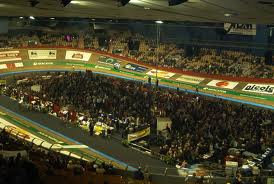
There are many good places to stay in Belgium depending on your personal preferences. If you like cities, Gent is your best bet. It is cheaper than tourist-overrun Bruges, a lot more authentic and a whole lot more cosmopolitan. It has a great university and two wonderful velodromes. One is the "Wielercentrum Eddy Merckx" along the Watersportbaan, and the other is the famous "Het Kuipke," in the Citadel park where six day races have been held in the fall since 1947.

Kuipke--the little tank

In many ways, Gent is the most attractive city in Belgium and it has long been my favorite. You can find good hotel deals on the outskirts, especially around the University hospital. That location has the additional benefit of being near the Schelde (Scheldt in English) river, where a long bike path (all the way to the French border) provides one of the best places to ride intervals.

Gent is also a great place for extended stays as you may be able to find student housing known as a "studentenkamer" or "kot," for a reasonable price. Gent is easy to reach by train and has it has the best public transport connections you can dream of. It is also where the E17 and E40 motorways intersect, the main arteries that go north-south and east-west.

When it comes to bike tourism, Oudenaarde and environs are tops. Oudenaarde is a somewhat sleepy town on the Schelde river that has seen a revival recently. Much of that is due to cycling and the Ronde van Vlaanderen. While Oudenaarde does not have the same selection of hotels that Gent does, it has a lot of vacation homes and bed and breakfast places that are geared towards cyclists. Oudenaarde also has cyclist housing,  great bike shops and tons of fabulous riding. Nearly all climbs and cobblestone sections of the Ronde are within easy riding distance from here.

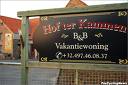
Tourism East Flanders (Toerisme Oost Vlaanderen) has a website where you can find information regarding rooms, vacation homes and bed and breakfast places. There is a special option to find bike-friendly (fietsvriendelijk) places. One place that comes recommended is Hof Ter Kammen, a bed and breakfast near the Koppenberg.
Hof Ter Kammen


Geraardsbergen, home of the infamous "Muur" is another excellent location. Here too you can find great bike routes, good bike shops, and tons of vacation rentals.

The Kapelmuur in Geraardsbergen

In Belgium lodging is nearly always sold "per person" instead of "per room," and most places include breakfast with a stay. For extended stays, vacation rentals are usually per week, or per month and typically you need to add a fee for utilities and a cleaning to the listed price. Regular houses are 3 year rentals, although you can find 1 year rentals in bigger cities. Student housing is more flexible (the academic year runs from October through June) and is usually negotiated on a case by case basis.

Belgium is a first world country and nearly everything you can find in the US you can find in Belgium. When it comes to biking there is absolutely no need to bring extra stuff, spare parts or lots of tools. All these items are easy to find locally at prices that are comparable to those in the US. Do not bring extra fancy, superlight race wheels to Belgium. Best is to bring a durable wheelset that you can train on and race on. There are no long climbs here but tons of bad roads and cobbles. The latter are favorites among race organizers so be prepared.

Unless you are sponsored by a deep pocket team, it is better to leave the carbon fiber stuff at home. Also avoid one of a kind components with proprietary nuts and bolts that are special order items.

Monday, October 4, 2010

Belgian cuisine


Cuisine is one element of Belgian life that reflects its Counter Reformation history. In all matters food related, Belgium is closely aligned with (catholic) France and distances itself from the (protestant) Netherlands and Germany. Belgian cuisine is a variant of French Cuisine. It is largely based on potatoes, cream, butter, cattle and seafood. Being fairly far north, traditional Belgian cuisine is limited when it comes to fruit and vegetables, especially in winter.

One key difference with the French is the distribution of meals. Like the French the Belgians start the day with fresh pastries and bread. Bakeries open before dawn and it is a customary to go buy fresh bread or simple pastries (boterkoeken) for breakfast every day. Belgians may add a boiled egg and some cheese spread but they rarely eat meat, fish, or cereal for breakfast. Preserves or chocolate paste (choco) are the rule. Volume-wise, breakfasts are bigger than in France, where natives rarely eat more than a single croissant.

Neither pancakes nor waffles are eaten for breakfast in Belgium. These make excellent mid-afternoon snacks with coffee but are not breakfast items. Mid-afternoon is also the time for fancy pastries. American style pancakes are absent and all Belgian pancakes are thin crepes, often filled with fruit.

The main meal in Belgium is lunch and nearly everyone eats a hot lunch every day. Shops are closed over lunch time so shopkeepers can eat a good meal. The staple is potatoes and the favorite way to prepare potatoes is fries. All Belgian homes have a deep frier and Belgians will buy a deep frier before they get a refrigerator. Most Belgians think "French fries" is a misnomer and the dish should be called Belgian fries instead. Fries are also the favorite snack food and hamburgers and hot dogs are a recent introduction. Fries with mayonnaise or one of the dozens of mayonnaise-related sauces is the prototypical Belgian snack. Ketchup is rare. Small meat items such as sausages may be added.

Rice is far less popular and finding good rice in Belgium is a challenge. Corn is almost completely absent. Belgians think of corn (maize) as chicken feed.

Belgians will tell you that the prototypical Belgian dish is steak and fries with lettuce and tomato. Unlike the French and unlike what Americans think, Belgians rarely eat horse meat and the habit is restricted to a few regions close to the French border. Belgians also rarely eat lamb.

Beer is the universal drink and until recently no adult would be caught dead drinking a soda. Every restaurant, including McDonalds, Burger King and other transplants serves beer. As recently as 50 years ago, every village had its own (or several of its own) brewery and people would drink the local blond ale. Most native Belgian beers are ales. (Local) Pilsners are now the most commonly drunk beer but this style is an import from Germany. Drinking age in Belgium is 16, although bars will allow anyone to drink beer if the parents agree.

Dinner is a simple affair and consists of bread with cheese and prepared meats (charcuterie). As a rule, restaurants are for special occasions and when going to restaurants people change their eating habits to a light lunch to make room for an elaborate dinner. Good restaurants do not have "seatings" and you are expected to take until midnight (or close to it) eating dinner. Dinners start at 7 or 8PM and mid-afternoon dinners are unheard of. Going to a restaurant is a way to spend lots of money and good restaurants are not cheap.

Casual dining has become more popular, but always expect to pay a hefty premium when eating out. Unless you want to spend outrageous amounts of money for bad to mediocre food, avoid tourist traps such as the market place in Bruges. Just around the corner you can find better fare at a more reasonable price.

It is customary to go to restaurants for special occasions such as Christmas or New Year's eve. At that time, people will eat game (pheasant, hare, wild rabbit, boar, venison, etc.). Seafood is also very popular and two very popular (summer) dishes are mussels and grey shrimp. Belgium also has great oysters and Scottish smoked salmon, but lobster and crab are very expensive and better savored elsewhere.

Belgians drink a lot of wine and every self-respecting Belgian has a wine cellar in their house. Belgium is the top per-capita importer of French wine.

Although there are ethnic restaurants, I would recommend staying away from most. The cuisine is always heavily modified to suit local tastes and rarely resembles the original dishes. Chinese restaurants in Belgium invariably serve Indonesian and Philippine dishes, while Mexican food ( a recent trend) is so unlike what you would expect to get in Mexico that it is not worth the money.

Belgium is known for its beers, although most are novel creations that plagiarize existing beers and were adjusted to suit foreign palates. It is difficult to find good authentic beer but certainly worth the trouble when you do. Another local favorite is chocolates, but the best chocolate is found away from tourist spots in local bakeries. Easter is the traditional time to eat chocolate and all bakeries will make easter eggs.

Another recent introduction that has many people ranting and raving is speculoos paste. Speculoos is a traditional cinnamon and ginger cookie that used to be eaten only around St. Nicolas day (early December) but is now available year round. A few years ago, a paste was introduced to compete with peanut butter -a Dutch import. This paste has become an all time favorite of cyclists visiting Belgium, but it is as new to the country as it is to them.

Waffles too are a tourist invention. While some places in Brussels and Liege (and along the coast in summer) used to serve hand-held sugar dusted waffles as an afternoon snack, eating waffles as a snack for adults was at best a regional curiosity. Belgian families would make waffles in winter time as an afternoon snack for the kids but adults eating waffles was rare. Typical Belgian waffles are fluffy and yeasty with light powder sugar dusting and very unlike the heavy duty sugary contraptions topped with ice cream and chocolate sauce that are now ubiquitous in tourist locales.