Showing posts with label power clinic. Show all posts

Monday, November 15, 2010

Coaches' wisdom and an abbey beer that isn't

While I am struggling with a piece of windows software, that like most pieces of windows software isn't really ready for prime-time, I was reminded of the following tidbits I heard at the coaches' clinic in San Diego. In no particular order, here are some gems:

-A large part of your job as a coach is to come up with interesting workouts so your clients don't get bored.
-Many athletes can accurately estimate their perceived level of intensity, if you say do a workout at this power level, they nail it every time.
-Perceived intensity correlates with blood lactate levels
-You can use a power meter to train yourself to get an accurate perceived intensity
-I never use a heart rate monitor anymore, it adds no value
-I haven't looked at a heart rate monitor in years
-Heart rate is always at a max for the entire duration of this workout, it tells you nothing
-When I look at this power profile, I don't need a muscle biopsy, I can tell what the outcome will be
-Quadrant analysis was developed to prove a point
-Crank length does not matter. 165 to 180, it all works equally well.
-Eat normal food as much as you can during an endurance event
-You can only absorb 3-400 calories per hour. Most people can only do 2-300.
-Most people get stomach issues when they try to eat 3-400 calories an hour in just carbohydrate
-Protein has no use in endurance other than to possibly prevent GI issues

And to digest all that, let me propose an abbey beer that isn't. Maredsous, named after the Benedictine Abbey at Denee, near Namur, is brewed by Moortgat Brouwerij NV, makers of Duvel, the best of all Belgian beers. In some sense it is an exquisitely Belgian product, being conceived in Wallonia and crafted in Flanders. The bottle does not carry the hexagonal official Trappist marker, since the brew is not made at the abbey by monks and furthermore, the Benedictines at Maredsous aren't even Trappists.
Maredsous blond 6
Nevertheless the Blond 6 is a wonderful concoction. Not quite as crisp and clean as Duvel, but softer and equally flavorful. The recipe is said to have been developed at the abbey, hence giving the beer its creds.

Maredsous is also the name of a semi-soft artisanal cheese that goes well with this beer. Five varieties exist and all are made at the abbey.  The Tradition and Mi-vieux can be found in most grocery stores and supermarkets all over Belgium and Europe. Unlike the beer, Maredsous cheese is not imported into the US.
Maredsous cheese, to get this you need to visit Belgium

For you lovers of dark brews, Maredsous also comes as Bruin (brown) 8 and a Tripel 10. As the numbers indicate these contain more alcohol (by %) and hence should be savored more slowly.

Wednesday, November 10, 2010

The onslaught of gadgets

Although it is more than 25 years ago, I will always remember my obstetrics classes from medical school. It will always stand out to me as an example of technology gone wild. It all happened in the early years after fetal monitoring leads made their entry into the clinic. From our perspective as students it appeared that everyone in obstetrics was in a drug-induced euphoric state. The professors could not stop telling us about the big changes that were afoot and how these were revolutionizing the field. To them, and to their fellow obstetricians it was as if the dark ages had suddenly ceased to exist. It was the dawn of the new age.

For all of human history up until that day, obstetricians -and no doubt parents- had wondered about what was really going on in the womb in those last hours before the baby was born. That was the time of great mystery. If only they could gain a deeper insight into the fetal condition.
The dawn of a new era

Everyone was holding their collective breath in anticipation of how the baby was going to come out. Was it going to be OK or would it suffer irreparable damage due to ill effects of vigorous contractions or a dangerous passage through the narrow birth canal? There were only very indirect methods to gain any insight. Until the fetal monitor appeared. Now deeper insight was here.

Suddenly overwhelmed by an influx of data -albeit extremely modest by today's standards- obstetricians were quick to gather, analyze, tabulate and catalog the various waveforms, rhythm changes and impulses that were streaming out and providing a continuous real time view of the baby's heart rate. There were early decelerations, late decelerations, rapid decelerations, slow decelerations, and other changes to map, analyze and explain. Soon journals were filled with theories floating around trying to explain what it all meant.

For us as students, it meant pages and pages of tables added to the obstetrics syllabus. Faced with the task of memorizing all this stuff and my inherent laziness-then more pronounced as befitting a true student-, I tried to discover a pattern that would be useful in data reduction -or compression. Fortunately, it did not take me very long to find such a pattern. Regardless of what the various indicators (ECG, blood gases, etc.) said, there was only one solution: get the baby out. Even if the indicators were in doubt, getting the baby out was the solution. You could never go wrong getting the baby out quickly.

Not to be overly cynical but getting the baby out quickly had been the OB's mantra since the start of the profession. So what really changed? Well for one, now we had tons of data and graphs to show why we had to get the baby out quickly.

Fetal monitoring became a big contributor to the popularity of caesarean section. The other big contributor was convenience and maximizing profits. But at the very least, now we had hard data to go hand in hand with convenience and better fees.
Fetal heart rate during pregnancy

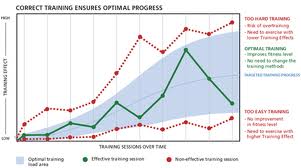
Why do I bother telling you this on a cycling blog? Because I have a strong sense of deja-vu. The enthusiasm and hype surrounding power, power meters and training with power is very similar to what happened back then. And it will only get worse once exercise physiologists get a deeper insight into the pedal cycle (the holy grail of cycling). Soon  the new Polar/LOOK power pedal will open another treasure trove of data and potential analyses. Look for quadrant analysis squared!
Training
Twenty five years ago, people did not have the PC's, iPad's and iPhone's that clutter our everyday lives. Although there were many obsessive and meticulous practitioners tabulating and graphing the various cases of rapid and no-so-rapid decelerations in fetal heart rate, it was not something that was accessible to the public at large. There were no fathers-to-be pacing the hallways and monitoring the heart rate of their sons and daughters-to-be on their iPhone, much like we now have amateur power-freaks monitoring the instantaneous Schleck and Contador power fluctuations in the Tour.

Perhaps one other fact needs to be emphasized. What has fetal monitoring done to enhance birth related issues? Was there a big dip in morbidity and mortality associated with births in the latter part of the previous century? Granted, you won't find a single OBGYN who is not convinced of the fantastic and deeply beneficial effects of birthing with monitors, much like you won't find a single coach who isn't convinced of the wonders of training with power.

Saturday, November 6, 2010

San Diego

In the US, we have this expression, on the wrong side of the tracks, and you could say that here in San Diego I am staying on the wrong side of the freeway -the California equivalent of tracks. The Hampton Inn SeaWorld may be a convenient location for those visiting Sea World, or those waiting for their cruise ship, or those wanting to stay close the airport, but it is not in a nice part of town. On the other side of the freeway however is one of the nicest spots in San Diego, aka Old Town. Unfortunately, without car, Old Town is on the other side of the Universe.

I am attending a USAC power clinic, where I am learning all the ins-and-outs of cycling with power. What I have learned so far today was enough to tell me that my intuitions about power and power meters were essentially right and that I have been using my power meter correctly and for all it is worth. That is good but not unexpected. It is also not due to any special powers of mine. If there were secrets to the power meter that normal mortals could not divine one would have to seriously consider that the device was yet another form of snake-oil. It is  not.

Today I learned the origin and background behind such concepts as normalized power (NP), Intensity Factor (IF) and TSS, all of which are on my Ergomo display. I also found out I had used these values correctly and as intended by the developers -It turns out most of this is the work of Andy Coggan. Since Andy's presentations are on the web, I probably could have known about all this much earlier, but for some reason I never did. Firstly, because I was unaware of Andy's key role. Secondly, because I always assumed NP was a proprietary calculation done by Ergomo as is this is what their manual says.

A large part of the clinic is devoted to TrainingPeaks and WKO+, which is a nice piece of software but essentially a fancy form of Excel combined with some web and file transfer tools. WKO has now become the de facto standard for power users. The good side is that it has some very nice features and some dazzling displays. You can do all the same things in Excel (I do since WKO only runs on Windows). But it is easier to use WKO since all functions are built-in in menus and you don't need to think as you would in Excel. The big caveat is that -like any statistical visualization package- WKO teases people with many fancy-looking but otherwise meaningless graphics.

The danger of overanalyzing data is great. So great that it was readily apparent in the questions coming from the audience. Both coaches and their clients want to, and feel the need to, and are driven to, massage the data and derive conclusions that are often unwarranted.  It is something I often saw in medicine too but in medicine, reality often bites and then puts a stop to extreme fancifulness. In coaching no such hard stops are apparent and so the danger of misuse is much greater. The only stop athletes and coaches see is frustration after years of delusion and self-delusion. That is a hard price to pay. Fortunately most coaches have enough common sense to stop before that happens.

Stay tuned for more racing in Belgium next week.