Showing posts with label power meter. Show all posts

Sunday, March 20, 2011

Interval workouts

A short post today as I am still on my blogular holiday, trying to get everything ready for our Belgian trip in April.

Here is a sample of an 1.5 hr interval workout on rollers. Several interesting observations can be made, which I will leave to the reader as "homework."  The intervals are 2 minutes, 1 minute and 30 seconds. Power in red, cadence in green.


Another set added in on Tuesday, March 22. 1 hr ride. Same rider. Scale adjusted.


Another set, one hour, added on Wednesday, March 23. Different rider.


Tuesday, February 1, 2011

The ergomo power meter

I got my first Ergomo Pro power meter in 2005. I had it installed on my Griffen Vulcan triathlon bike and have been using it ever since. Most often I use it with the bike on the trainer but I also record my races and from time to time, my training rides. I use ismarttrain software on my Macintosh to retrieve the data. I analyze the data in Excel. It works like a charm.

For my USA Cycling power exam -which still isn't graded apparently- I had to use WKO and Trainingpeaks. It was not a pleasant experience and I can only say that Windows users must have a very high tolerance for poorly written software if they like this stuff. I for one, will stick with Excel. But back to Ergomo.

In 2007, after the German parent company got in trouble and cheap Ergomo units became available on eBay, I bought a few more and these I have used on and off on a road bike. At that time it was pretty easy to get a NIB Ergomo for around $300. The parent company went bankrupt and it seemed the end was near.

Last year, the Ergomo IP and assets were taken over by a Colorado outfit and they have since started to add new units and new features. My older Ergomo had a near-dead battery and I sent it to them to have it fixed. It came back, refurbished, with new battery and new seals and works perfectly. Even though the Ergomo brand is alive again, people continue to dump older units on eBay. Prices have risen somewhat from the low of $300, but it is still possible to get a first rate power meter for less than $700. Given how pricey SRM is, it is a steal.

The Ergomo had some early adopters, including Hunter Allen, Mr Power himself, who was an adviser to the company. Since then Mr. Allen has moved on and he is now a clear proponent of SRM. In spite of this early association with the driving force of power meter use, Ergomo never really "made it" to the big leagues. Nevertheless, the Ergomo is a high quality unit that is maintenance-free, very durable, extremely weather-resistant and long lasting. It is every bit as good and useful as the overpriced SRM.

The reason Ergomo never took off has a lot to do with the fact that it has been plagued by two issues since its inception. The first is really not an issue at all but it loomed big in the minds of Freds everywhere. It has to do with how the unit reads power.

Ergomo measures the torque in the bottom bracket axle. That is in many ways an ideal place for measurements and it has several advantages. It can be done friction-less, with minimal additional weight (the Ergomo pickup is optical and the weight penalty is totally negligble), and it also offers the best protection from the elements. You can literally drag the Ergomo through the mud without any issues whatsoever. That is one thing Mr Allen acknowledged when he showed his mountain bike (for Ruta) sporting an Ergomo.

Ergomo BB, square (Campy) type

The key worry is that the unit only measures the output from one leg (the left leg). The twisting of the axle (between the left crankarm and the right crankarm) is measured using an optical non-contact method. The value is doubled and plugged into an equation to get a power output. (No power loss but only half the effort is really measured)

For all practical purposes (and even scientific experiments) the one-leg measuement makes no difference whatsoever. But it really troubles the Freds, who have nothing better to do than to worry about such trifles. Even Mr. Hunter took it upon himself to joke that some people may have a monster left-leg that distorts the readings. "It happens, you know," he added. Maybe his new employer thought he should keep the doubt alive?

No asymmetry here

The second problem is related to the first. Just about the time that Ergomo hit the market, most component manufacturers switched (back) to the two piece crank with attached axle. Shimano led the way with HollowTech -as they usually do when it comes to gadgetry- but others soon followed. That move unfortunately, made the bottom bracket with axle look old-fashioned overnight. And perhaps more importantly, it made it so new cranks would no longer work with the Ergomo. I believe this played a big role in Ergomo's demise.

The component people also strongly advertised the benefits of the new two-piece crank. It was lighter and (magic word) stiffer, an attribute no Fred can ignore!

 It is perhaps ironic that before that time, two piece cranks were only found on cheap French bicycles. For decades the two piece crank had been the telltale sign of a cheap crank. But Shimano, a company that also tried to revive the non-round chainring (remember Biopace?) loves this type of innovation.

Remember those??

The Ergomo has a high quality display that is easy to customize. Although it is a tad big, it is easy to read and easy to use. The standard layout has two main screens and five secondary screens. On each screen there are four values. The unit can do metric and English (or even a combination of both).

You can display all kinds of information but the basic main layout shows power, heart rate, cadence and speed. There is an alternative main readout that shows altitude, % grade, power and speed.

Then there are four screens that contain additional information.  One of these has averages, the other maxima, the third calories and joules, with total distance and trip distance, and the fourth has analysis data.

For those who are really into power analysis, the fourth screen shows power (Watt), Normalized Power (NP in Watts), Training Stress Score (TSS) and Intensity Factor (IF).  These measures will sound familiar to the aficionados of the Coggan-Allen literature.

On bike analysis
Normalized power is perhaps the most useful measure and even before I learned about Coggan and his research I had figured out how to use it (Being a mac user, I don't read manuals, nor do I buy books that explain gadgets to me.)

When I bought the Ergomo in 2006, I knew very little about Coggan and his work. I certainly did not know that his friend and co-worker Allen was an adviser to the company. A recent USA cycling coaching publication explained to me that Allen was the one who urged Coggan to "develop" IF and TSS. I never saw much use in these values and even now that I know what they are for, I hardly ever use them. TSS is nothing more than how tired you are, while IF tells you how hard you went.

Before I learned all this I just thought NP was a proprietary measure that Ergomo had developed.

What I did figure out quickly however, is that NP correlated well with my perceived effort. And later I noticed that it was very useful in time trialing (ironman is a long TT) to keep NP and average power as close together as possible. What that really means is that you stay aerobic as much as possible. Checking the average and the NP afterwards gives you a good indication of how well you did sticking to that rule. The reason you may want to check is because it is easy to go hard without noticing.

The final Ergomo screen shows how much battery power is left, how much recording time is left, and other household items.

For mac users, ismarttrain will not just download the data. It will also allow you to set all the values you need to set. The only thing you can't do on a Mac is to update the firmware. To do that you need a Windows box.

I forgot to tell you about intervals. If you like Ergomo can store intervals and keep them separate. It is something I never use but it is there in case you need it.

Monday, November 22, 2010

A power meter for Christmas?

If you are like most people, you probably look for new gadgets and when you see one that you like, you go out and buy it regardless of whether you need it or not. You also probably do not worry about whether it is helpful or practical. I suspect many people who end up with heart rate monitors and power meters fall into this category. I can certainly plead guilty in this matter. Perhaps my only redeeming value here is a vaguely scientifically motivated interest in human performance.

I certainly claimed such interest when I bought my first heart rate monitor 20 years ago. I was curious to see what it would reveal about my rides and my conditioning. To wit, I never really thought of it as a training device and hence I never bought any books entitled Racing with a Heart Rate Monitor or  Racing and Training with a Heart Rate Monitor. I simply set out to record my heart rate under various conditions and to interpret the results. I stayed away from Zones, remembering a previous bad experience in photography.

Pretty soon I discovered two things: 1. That I could accurately predict my heart rate in most conditions; and 2. That my heart rate did not contain much new information beyond what I already knew. These may sound similar but are in fact different. The first means I quickly learned to associate a number with a certain feeling of stress or perceived exertion. The second is no different from the statement I heard at the power clinic in San Diego, "Heart rate is always at a max for the entire duration of this workout." I found out that when I worked really hard, my heart rate was at maximum aerobic. When I went above I immediately felt like I wasn't going to be able to hold it, and sure enough, my heart rate went up and up and I had to stop.

More or less the same thing happened when I bought my first power meter. Only this time I was smart enough to wait for a sponsored team discount. I had learned my lesson: gadgets like these are fun, but they aren't much use so get them cheap.

While the gadgets do not have much information, there is a reason why coaches like them: they provide hard data as evidence that you followed the prescriptions. The data shows you worked out and that you worked out as prescribed. Most cyclists don't have enough computer skills to fake a power output file. But most cyclists can easily deceive a coach who relies on perceived exertion and coaches know that.

It is a steep price to pay for a device that does nothing more than provide evidence of acting in good faith, but that is not the coaches' problem. It is not even unique to coaching. The very same problem occurs in medicine and doctors too make you spend a lot of money to prove that you did as prescribed. Many tests have just the same value: they tell the doctor you followed orders.
A plot like this is often shown to demonstrate the superiority of a power meter. It is deceptive.

In that sense the heart rate monitor is no different.  You may ask, why do cycling coaches ignore it? They do, because they can measure power, a more objective data stream. A heart rate monitor tells you how hard you worked, but if you have a power meter and you know how hard a person can work, you don't need the heart rate monitor because you already know how hard they worked by looking at the power file. If you are a running coach however, then heart rate is your only option.

How about power profiles, quadrant analysis, etc? The short answer is, these things are interesting from a research perspective. Furthermore they can show you things that you may not have thought about or that are not immediately obvious -but not things you can't find out otherwise!

However, just like any diagnostic, knowing more does not mean you can do more. You may have heard this joke about doctors: Internists know everything but they can do nothing, surgeons don't know anything but they can do everything, psychiatrists don't known anything and they can't do anything, and finally pathologists know everything and can do everything but they are always 24 hrs late. Although the joke pokes fun at how little medicine can do for you, one thing is a key part: knowing about something does not mean you can fix it.

You may know your power profile, or look at your quadrant analysis and see issues. But there is little evidence you can correct them even with "special exercises." There is not even enough evidence to say you should correct what you perceive as deficits or that doing so is even beneficial. But like medicine, that has not stopped practitioners from trying hard.

Saturday, November 20, 2010

Adventures with power meters

On Thursday the weather turned cooler and I decided to ride my rollers instead. Now that I have taken the official training with power class, I decided it was a good time to start doing things by the book. Not that it is that much different from what I have been doing -mainly the terminology is-, but now at least I can talk the talk and walk the walk.

The goal was to establish my Functional Threshold Power or FTP. FTP is the power a person can put out for an extended period of time. There are several ways to determine FTP but a 20 minute test is one of the more practical and attractive ways to do so. I decided to try to do "a 2X20" interval set, which would not only give me my FTP but also tell me how fit I am.

My 2X20 did not work out as expected. The first interval was fine, but I had to abandon the second one after 10 minutes. Still I was able to read out an FTP of 305W.  Yesterday I took the day off and today the weather is even worse so I decided I would ride my rollers again. Why not try a 2X20 again?

Today I rode a 2X20 at 315W without any problem. It wasn't easy -and it shouldn't be- but I was able to do it. My FTP score today is 320W, which much better and more in line with my expectations of where I am at. In case you wonder about this sudden surge in power, here are three reasons why this result is not an outlier.

The first is that I was better rested. That is also why I was able to complete the set.  The second is that the garage -where my setup is- was a whole lot cooler today than on Thursday. That certainly matters and I could tell from the absence of a puddle on the floor that the temperature made a significant difference compared to Thursday. The third reason is that I sat up a whole lot more today and I do have more power in a more upright position compared to a deep aero.

Friday, November 19, 2010

Rest day

Today I took a day off. Several things came together to make today an ideal rest day. First the weather turned ugly this morning and it started raining. Next, I came off a pretty good week of riding and was in need of some R&R. And finally, I was subpoenaed to make a deposition in a court case and it ended up taking all day. I just got back home at 4:30 after answering questions all day trying to remember events that happened more than 3 years ago.


Yesterday I did a power test on my triathlon bike that is mounted on rollers. I managed to get an FTP (functional threshold power) of 305W, a bit down from where I normally am. But after a week of hard riding that is perhaps not surprising. There was surely some residual tiredness. I tried to ride a 2X20 @315  but had to settle for 300W instead. On top of it I had stop the second interval at 10 minutes because of pain in my legs. I did continue to ride for another 40 minutes, occasionally hitting 310 for a few minutes and then rest a bit. I ended up with a 265W NP for the entire ride (warm-up and cool-down included).

This weekend I hope to finish my power licensing exam and then hopefully before year-end I will get my license. I keep struggling with the WKO+ windows software and boy am I glad I use a Mac! There is just such a huge difference. Windows users must have an exceptional amount of tolerance for poorly written software. I could never imagine a mac application like it.

It is not so much that WKO does not work, or that it does not work properly or accurately. It is more that the user interface is problematic and non-intuitive; that essential information is hidden in the weirdest places; that it is nearly impossible to use without reading manuals or having someone show you; and that the displays may or may not show the stuff you intend to show. It is klutzy at best, frustrating all the time, and downright deceptive at worst. I guess that is what you get when engineers write code.

Tuesday, November 16, 2010

Technocraze

There is little doubt that we in the Western world have grown addicted to consuming technology. In 2005, the US alone generated 2.6 million tons of e-waste. It is the fastest growing waste stream in the civilized world. We don't see it because most of it gets shipped to China. In some sense that is befitting since most of the gadgets we buy come from there originally.

e-waste

Gadgets dominate our lives and not always for the better. Deadly car accidents due to cell phones and texting have already taken up all the gains from enforcing DIU laws and then some. More people are being robbed and attacked because they are distracted by their cellphones than benefit from having a phone handy in an emergency. Gadgets are also a very expensive addiction on par with narcotics or other illegal substances.

I have to admit that I used to be an early adopter of all things electronic. I sold my record collection and switched to CD's before most record stores in Europe started selling CDs. That also coincided with my move to the US and since the US was lagging considerably in this matter, I had the hardest time finding music for many years.

One of the things that attracted me to cycling was technology and I quickly amassed enough gadgets to fill a small research lab. I bought one of the earliest heart rate monitors with a computer interface. At that time, the computer interface was bulky and cost more than the watch, which wasn't cheap either. Every time I rode I faithfully downloaded my data to the computer. It helped that I was working at a defense lab where computers were easy to access because at the time PC's were not common. I also sported one of the first laptops and lugged it around all over the world. I remember that many people looked at me with envy but they did not have to carry the box.

Years later I was one of the first to buy a power meter. And then a GPS. Not too long afterwards however, I started having second thoughts about gadgetry in everyday life. Not only was I getting tired of lugging stuff around, keeping it all charged, and downloading all the data, I quickly found that the data I collected were highly repetitive and devoid of new information.

Although lack of usefulness was not the main reason at the time, it did matter. Whatever the reason, I am happy to say that I am the most gadget-free rider out there. I don't even bother to install a speedometer any more.  As John Cobb once told me: "Why do you need a speedometer? As long as there is someone in front of you, you are not going fast enough."
My hitech Cockpit
More hitech cockpits

While I do not doubt the value of measuring devices such as heart rate monitors, power meters, and wind tunnels for those engaged in the quest for new knowledge, I think that their usefulness for everyday riders, and even pro cyclists, is not there. I would go further and say that in many cases these items become distractions that do at least as much harm as good -the good being next to zero in any case.

When you have a heart rate monitor or a power meter you quickly learn that after a short period of time, it becomes trivial for you to guess your heart rate or power output. These things do not change much and you can quickly develop a good estimate of your output. I used to be able to overlay my heart rate charts from all my Monday rides, all my Tuesday rides, etc. -we rode the same rides every week in my team- and they matched perfectly. 


If anything these items can become very limiting. If you rely on your power meter to tell you what you can do (i.e. to pace yourself) you could be limiting yourself. That too was said more than a few times at that same clinic -all the while showing that one of the uses of the power meter is to pace oneself.

The truth is that if you need a power meter to pace yourself, you probably also need a GPS to drive to the corner grocery store or a cellphone to keep track of your friends. If that is the case you will always lose out to those who can use their brain. It is the perfect low maintenance, low cost, supercomputer and it can run circles around those high tech contraptions. Furthermore, it is always there as long as you are.

Wednesday, November 10, 2010

The onslaught of gadgets

Although it is more than 25 years ago, I will always remember my obstetrics classes from medical school. It will always stand out to me as an example of technology gone wild. It all happened in the early years after fetal monitoring leads made their entry into the clinic. From our perspective as students it appeared that everyone in obstetrics was in a drug-induced euphoric state. The professors could not stop telling us about the big changes that were afoot and how these were revolutionizing the field. To them, and to their fellow obstetricians it was as if the dark ages had suddenly ceased to exist. It was the dawn of the new age.

For all of human history up until that day, obstetricians -and no doubt parents- had wondered about what was really going on in the womb in those last hours before the baby was born. That was the time of great mystery. If only they could gain a deeper insight into the fetal condition.
The dawn of a new era

Everyone was holding their collective breath in anticipation of how the baby was going to come out. Was it going to be OK or would it suffer irreparable damage due to ill effects of vigorous contractions or a dangerous passage through the narrow birth canal? There were only very indirect methods to gain any insight. Until the fetal monitor appeared. Now deeper insight was here.

Suddenly overwhelmed by an influx of data -albeit extremely modest by today's standards- obstetricians were quick to gather, analyze, tabulate and catalog the various waveforms, rhythm changes and impulses that were streaming out and providing a continuous real time view of the baby's heart rate. There were early decelerations, late decelerations, rapid decelerations, slow decelerations, and other changes to map, analyze and explain. Soon journals were filled with theories floating around trying to explain what it all meant.

For us as students, it meant pages and pages of tables added to the obstetrics syllabus. Faced with the task of memorizing all this stuff and my inherent laziness-then more pronounced as befitting a true student-, I tried to discover a pattern that would be useful in data reduction -or compression. Fortunately, it did not take me very long to find such a pattern. Regardless of what the various indicators (ECG, blood gases, etc.) said, there was only one solution: get the baby out. Even if the indicators were in doubt, getting the baby out was the solution. You could never go wrong getting the baby out quickly.

Not to be overly cynical but getting the baby out quickly had been the OB's mantra since the start of the profession. So what really changed? Well for one, now we had tons of data and graphs to show why we had to get the baby out quickly.

Fetal monitoring became a big contributor to the popularity of caesarean section. The other big contributor was convenience and maximizing profits. But at the very least, now we had hard data to go hand in hand with convenience and better fees.
Fetal heart rate during pregnancy

Why do I bother telling you this on a cycling blog? Because I have a strong sense of deja-vu. The enthusiasm and hype surrounding power, power meters and training with power is very similar to what happened back then. And it will only get worse once exercise physiologists get a deeper insight into the pedal cycle (the holy grail of cycling). Soon  the new Polar/LOOK power pedal will open another treasure trove of data and potential analyses. Look for quadrant analysis squared!

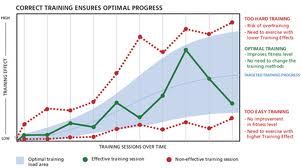
Training
Twenty five years ago, people did not have the PC's, iPad's and iPhone's that clutter our everyday lives. Although there were many obsessive and meticulous practitioners tabulating and graphing the various cases of rapid and no-so-rapid decelerations in fetal heart rate, it was not something that was accessible to the public at large. There were no fathers-to-be pacing the hallways and monitoring the heart rate of their sons and daughters-to-be on their iPhone, much like we now have amateur power-freaks monitoring the instantaneous Schleck and Contador power fluctuations in the Tour.

Perhaps one other fact needs to be emphasized. What has fetal monitoring done to enhance birth related issues? Was there a big dip in morbidity and mortality associated with births in the latter part of the previous century? Granted, you won't find a single OBGYN who is not convinced of the fantastic and deeply beneficial effects of birthing with monitors, much like you won't find a single coach who isn't convinced of the wonders of training with power.

Friday, November 5, 2010

Power clinic

I am off to San Diego this weekend for a USAC power clinic. The clinic is a two day event to be followed by an exam, after which I will be entitled "to coach with power." Certifying coaches to coach with power is a big driver for USAC. I think they see it as a great opportunity for coaches to bring in extra revenue. In that sense it is no different from getting one's ECG certification as a physician. I still remember those days!


I have had a power meter for several years now and I had ample time to work with power devices both using myself, my son, and a few clients as guinea pigs. I think I have learned a lot about what can and can't be done with power meters and where their application is most useful. As usual I took time to double check my results to make sure the numbers are consistent. I have also tracked my power output during the bike leg of several IM races. All that has -I think- given me a good feel for the devices and their application. I am therefore quite interested in seeing what the experts think.

I am also planning to test something else. In my post on tubeless tires last week I mentioned liquid sloshing around, which evoked a comment from a reader. That made me think. Did I fall victim to the same preconceived notions I was warning people about? Can you really feel liquid sloshing around in tires? It is definitely worth testing and I plan to begin doing so as early as next week. I will fill some tires with the recommended amount of sealant and see if I -or anyone else- can detect its presence while riding. Stay tuned for yet another update on tubeless tires soon!

Tuesday, November 4, 2008

35 Mile Ride

No rain today, but rather cold, with a chilly wind and lots of debris on the road. Yesterday's rain storm brought down rocks, dirt, branches and even some trees. There were crews everywhere working on power lines, phone lines, and cleaning roads. There were also a lot of "Sunday" drivers, out to go voting no doubt. Met a lot of people holding up "NO ON 8" signs, even in the suburbs.

I rode 35 miles, out Redwood into Moraga to Orinda and back over Wildcat and Grizzly. I think I saw Freddie but I am not sure. There was a rider wearing a Mapei outfit coming to Pinehurst when I rode out to Moraga. I did some hard climbs and took it easy on the descents and flats. Burned 1,695 calories according to Ergomo and had a normalized power reading over 250W with an average around 210W. So far so good. Took a little over 2 hours to finish.